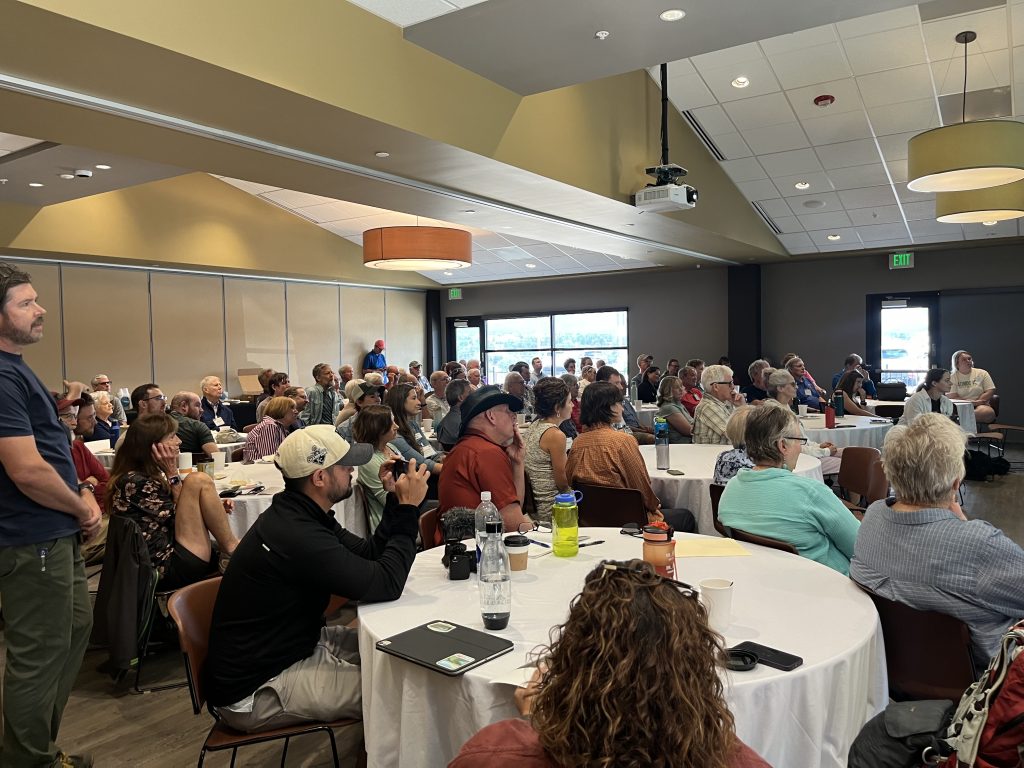
We’re now nearly a couple weeks past the 50th Anniversary of the Big Thompson Flood, one of the deadliest weather-related disasters in our state’s history. There were several commemorative events on July 31st that stretched from Loveland to Estes Park, including our symposium that we hosted. We heard great feedback from several of the ~100 folks who attended, and we hope to do more public events like these in the future. If you were able to make it, thank you for joining us!
We thought we’d use our blog as a medium to highlight some of the content that was covered during our event. If you’re interested in learning even more, we published an article in CSU Source, summarizing the key atmospheric ingredients that triggered the flood that day. And lastly, we’d like to highlight that the Loveland Museum has an exhibit for the flood that will be showing through the end of November. (Several folks from our team are planning to check it out)!
And while we’re on the subject of flooding, we’ll go ahead and remind you that this time of year is peak flash flood season in Colorado. As precipitation looms in the forecast, check the weather before you recreate, never drive through flooded roadways, and have ways to receive flash flood warnings.
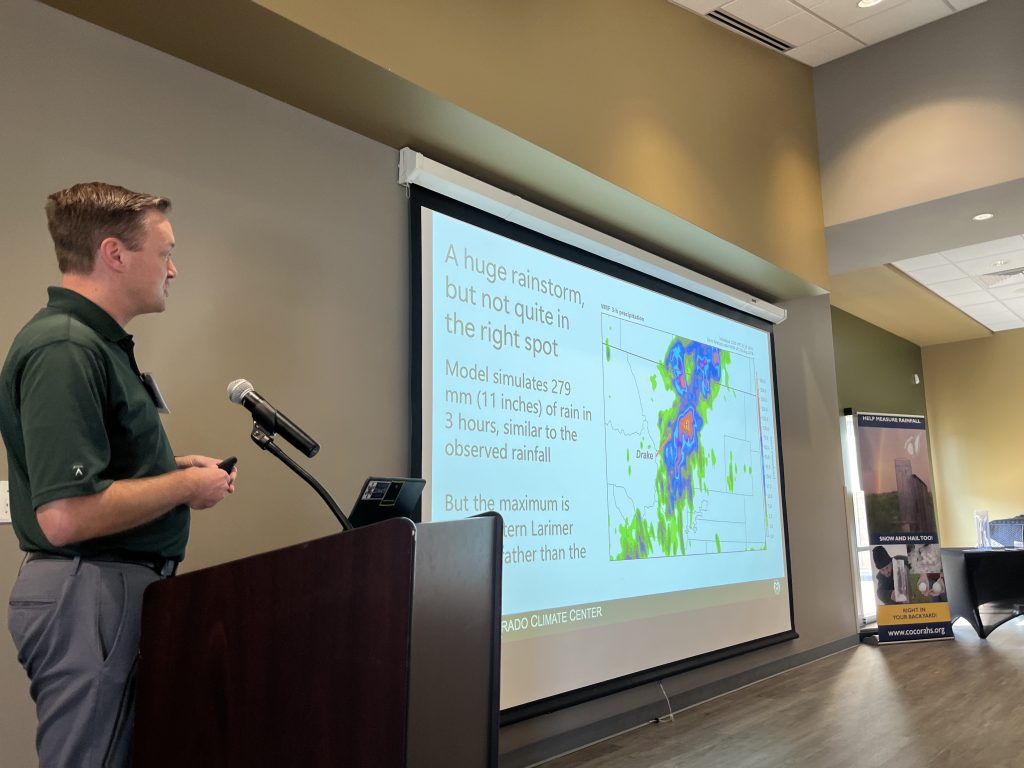
The Colorado Climate Center’s Dr. Russ Schumacher presented first, summarizing the meteorological factors that contributed to the Big Thompson Flood. He also shared his output from a high-resolution model simulation of the event, showing that it successfully captured the extreme rainfall rates but displaced the location of the storm.
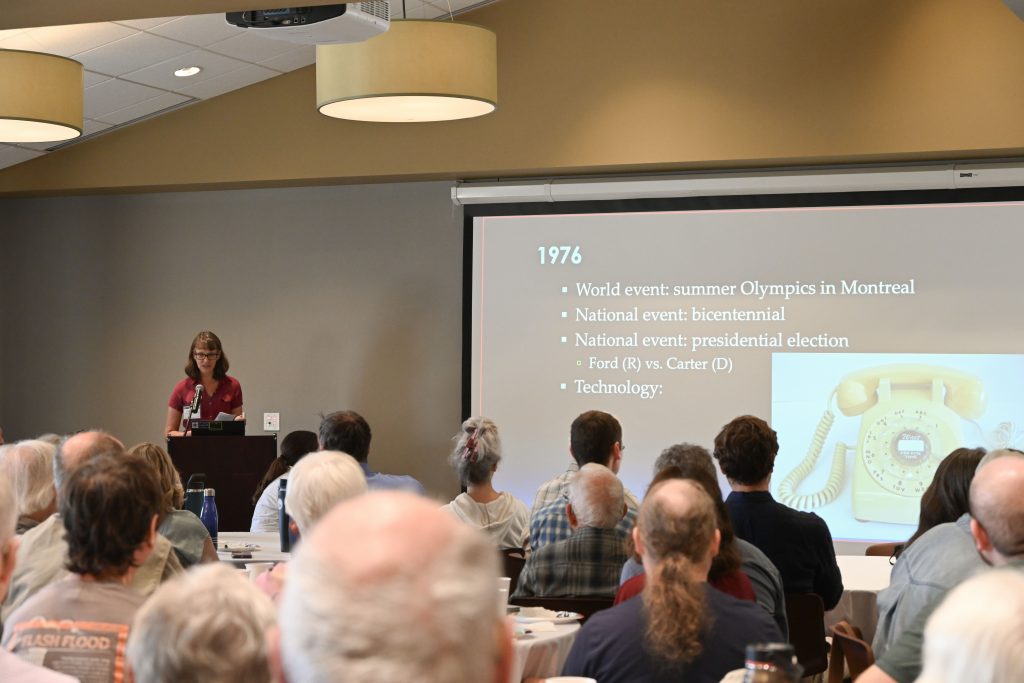
Patricia Rettig, archivist for the CSU Water Resources Archive, transported the audience back to the year 1976. She shared a series of harrowing photos of the aftermath of the Big Thompson Flood, detailing how the flood altered communications and reshaped lives. Photo courtesy of Theresa Barosh.
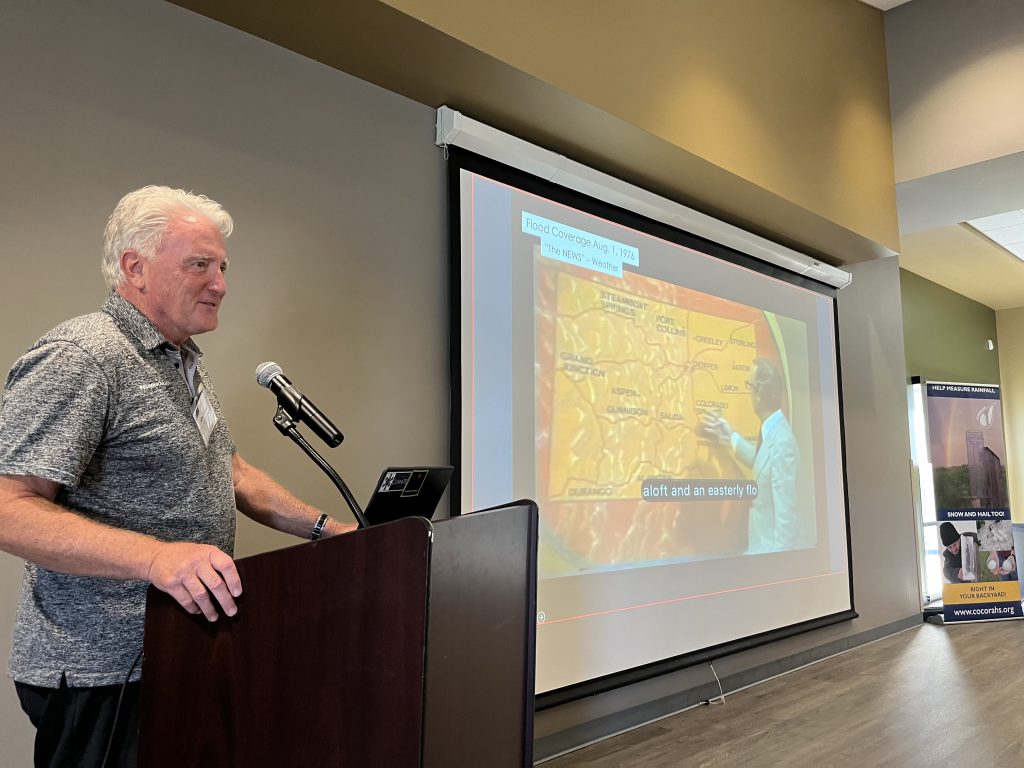
Mike Nelson, former chief meteorologist at Denver7 News, shared local news clips from the day after the Big Thompson Flood.
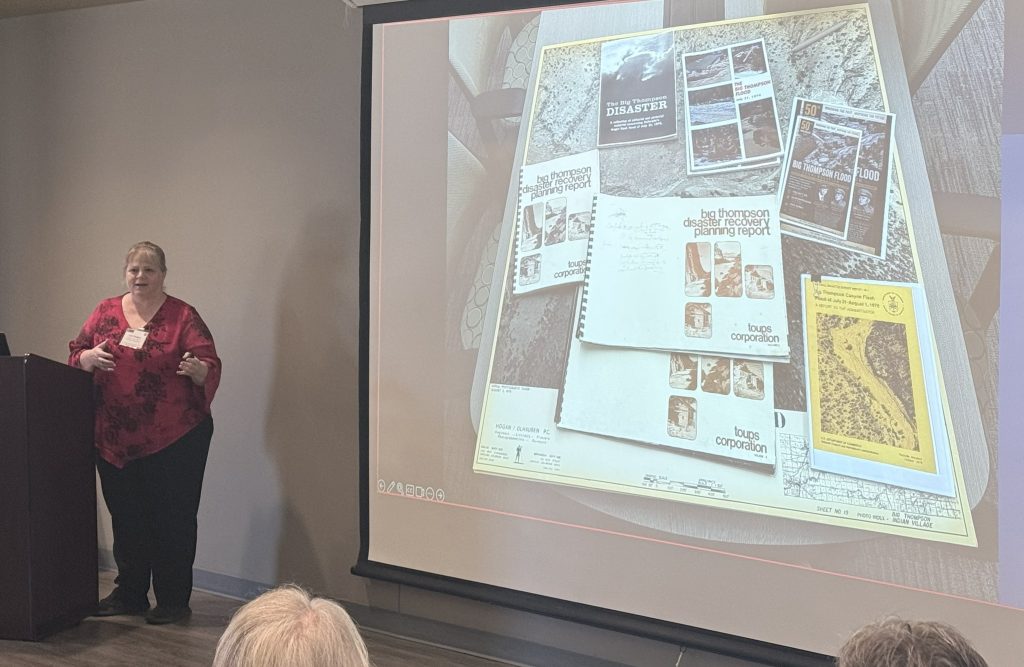
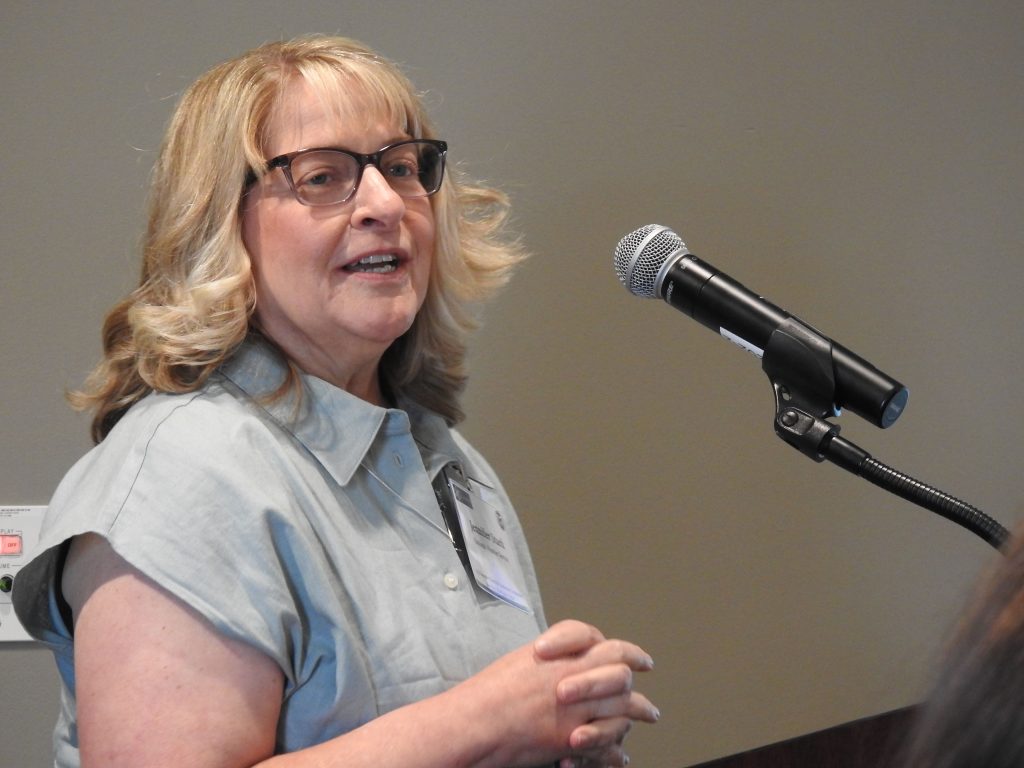
Dr. Lori Hodges, Director of the Larimer County Office of Emergency Management, has done extensive research on the Big Thompson Flood. She detailed the complexities of the recovery efforts that took place after the flood and described how communications have improved since. She also engaged with participants on the topic of the lack of cellular service in the canyon, explaining that that infrastructure would need to be put in place by service providers. Photo courtesy of Keil Neff.
The National Weather Service Boulder’s Jennifer Stark and Greg Heavener further detailed how the flash flood-producing storm evolved. They also explained that warning systems and collaboration between meteorologists and emergency responders have improved immensely in the last several decades. Photos courtesy of Ken Langford.
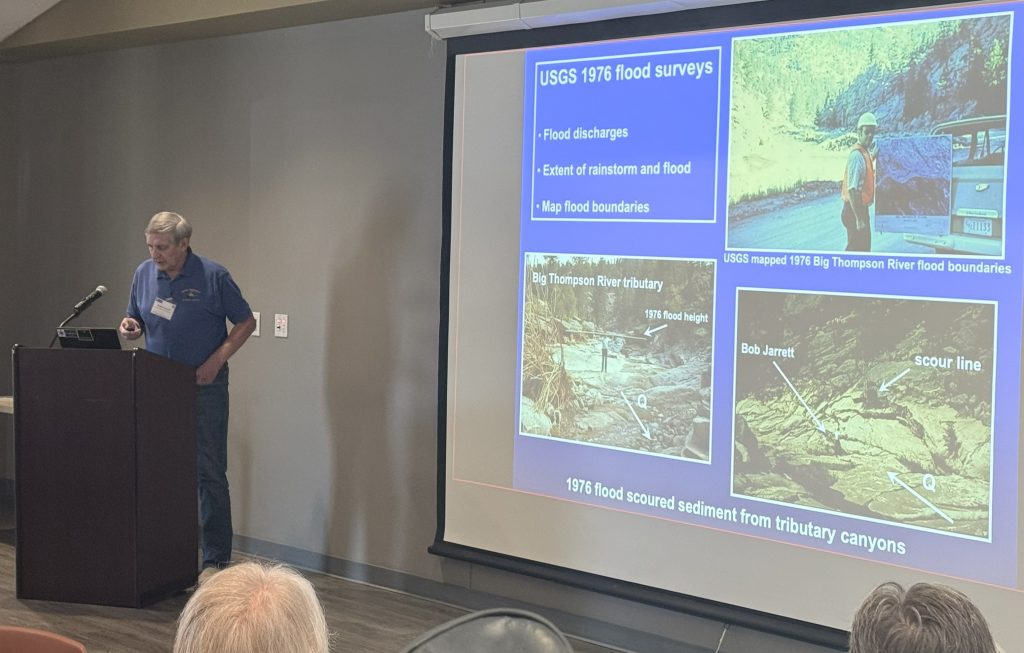
Dr. Robert Jarrett, formerly with the USGS, helped conduct post-flood surveys in the Big Thompson. The goal of these surveys was to determine where the flood waters went and how they reshaped the canyon. He also discussed USGS research on determining flash flood potential in Colorado’s canyons, including his own work on “paleoflood hydrology”–the assesment of historic environmental flood markers used to inform future flood risk. Photo courtesy of Keil Neff.
Dr. John England, Lead Civil Engineer at the US Army Corps of Engineers Risk Management Center, discussed flash flood research that has been used to inform risks surrounding dam safety, including the Olympus Dam in the Big Thompson.
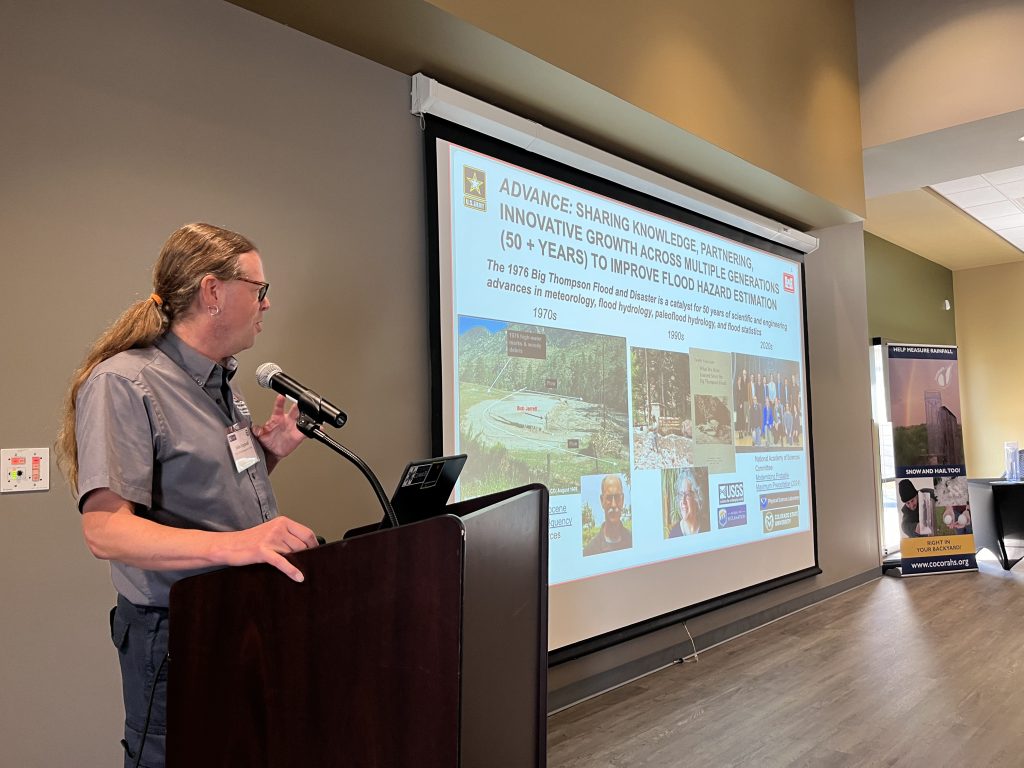
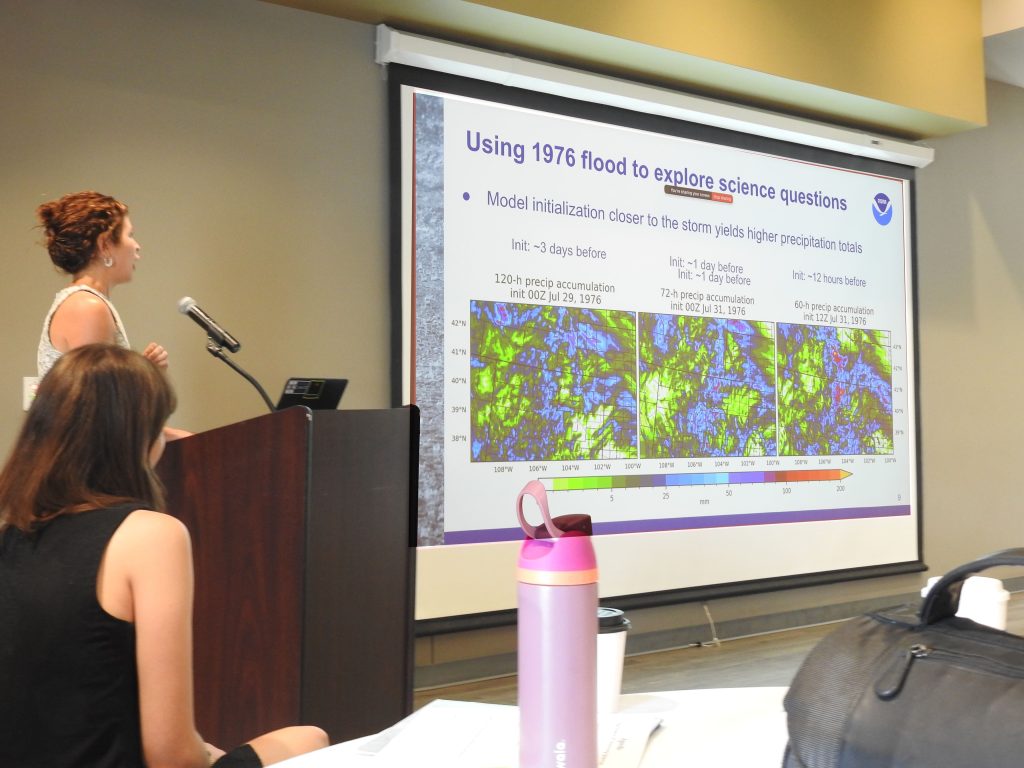
Dr. Kelly Mahoney (NOAA Physical Sciences Lab) details NOAA’s initiatives to better understand and predict extreme precipitation, including their work on probable maximum precipitation–or determining the maximum amount of precipitation that is possible over a given area. Photo courtesy of Ken Langford.
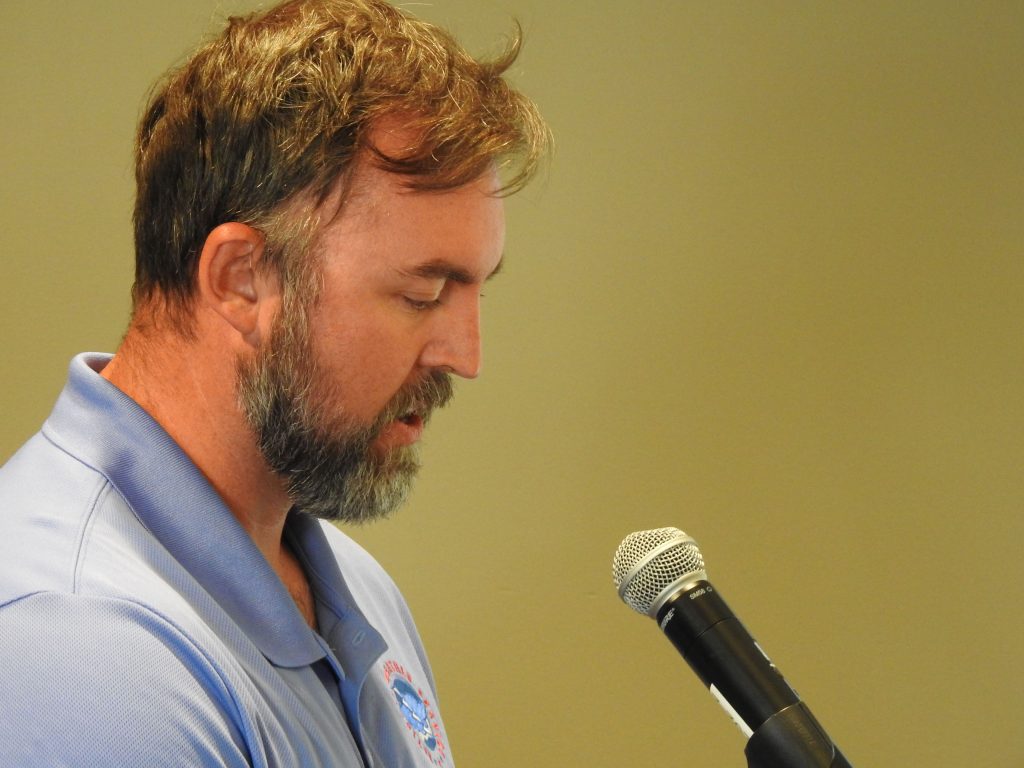
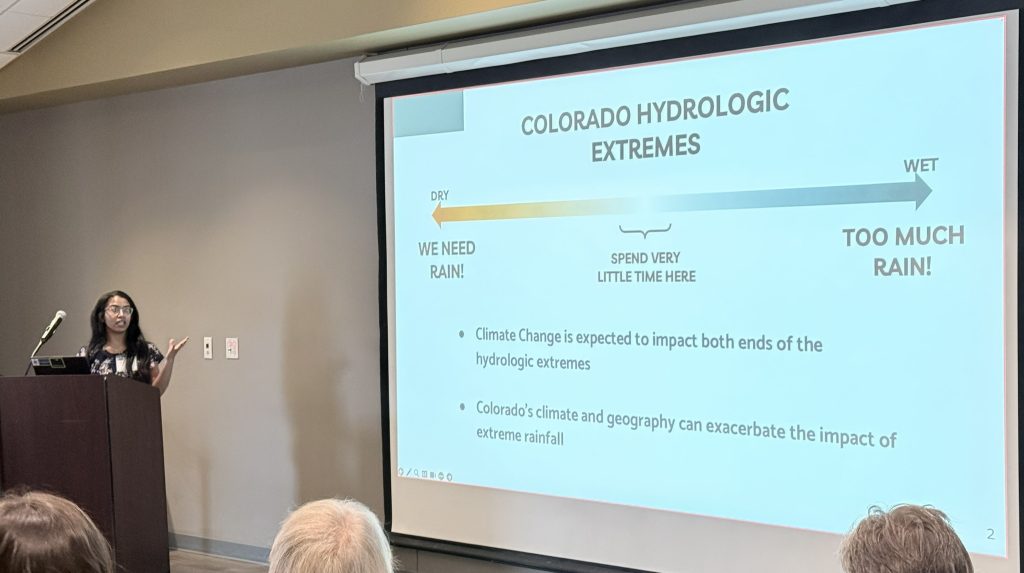
CSU Department of Atmospheric Science PhD Candidate Lexi Sherman presented some of her dissertation research. Lexi’s work examines how heavy rainfall and flash flooding in Colorado is expected to change in a future warmer climate. Photo courtesy of Keil Neff.
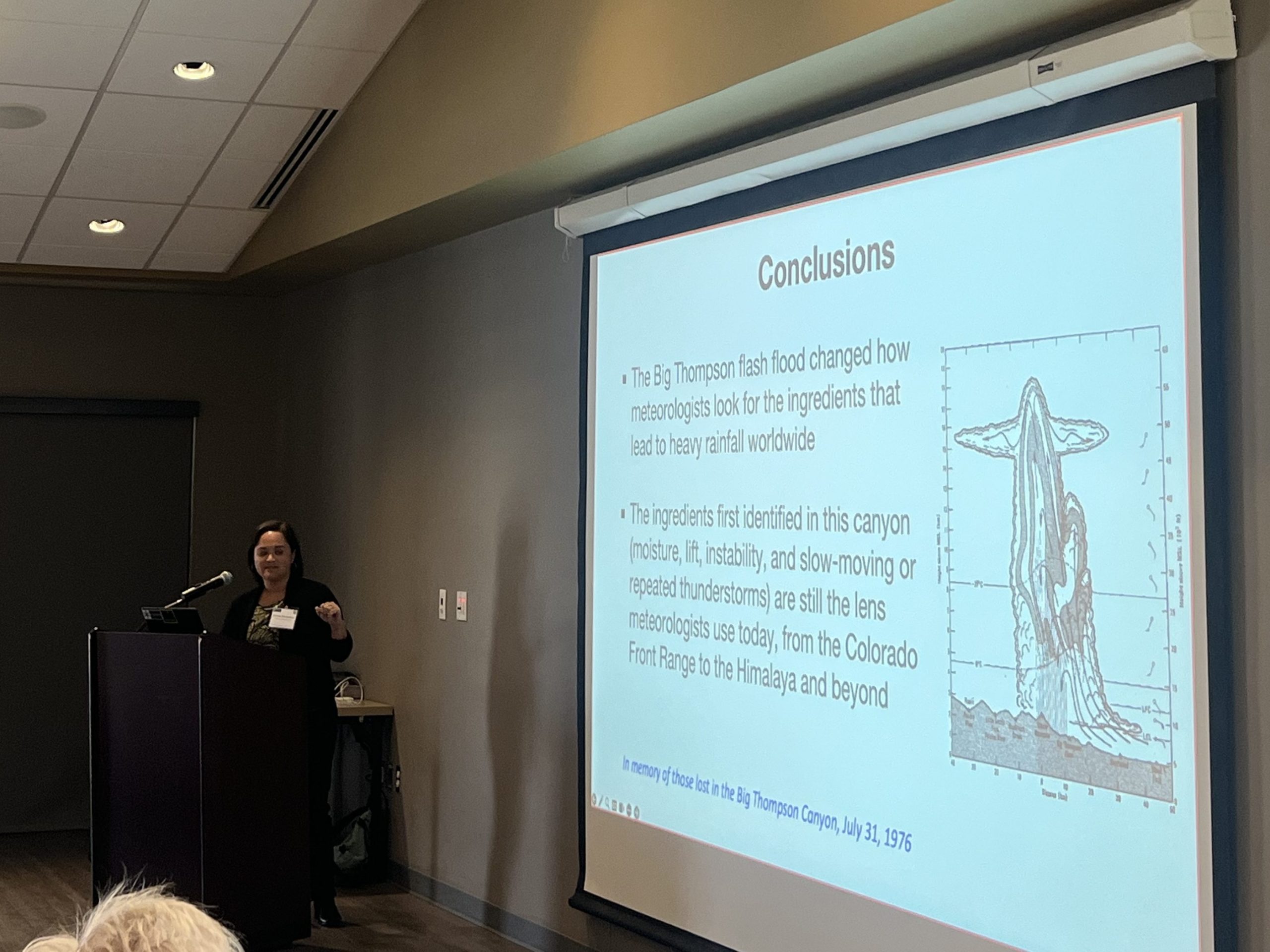
Our final presenter was Dr. Kristen Rasmussen, an Assistant Professor of Atmospheric Science at Colorado State University. She provided information on ingredients-based flood forecasting, illustrating how that approach can apply to both floods in the US and abroad.
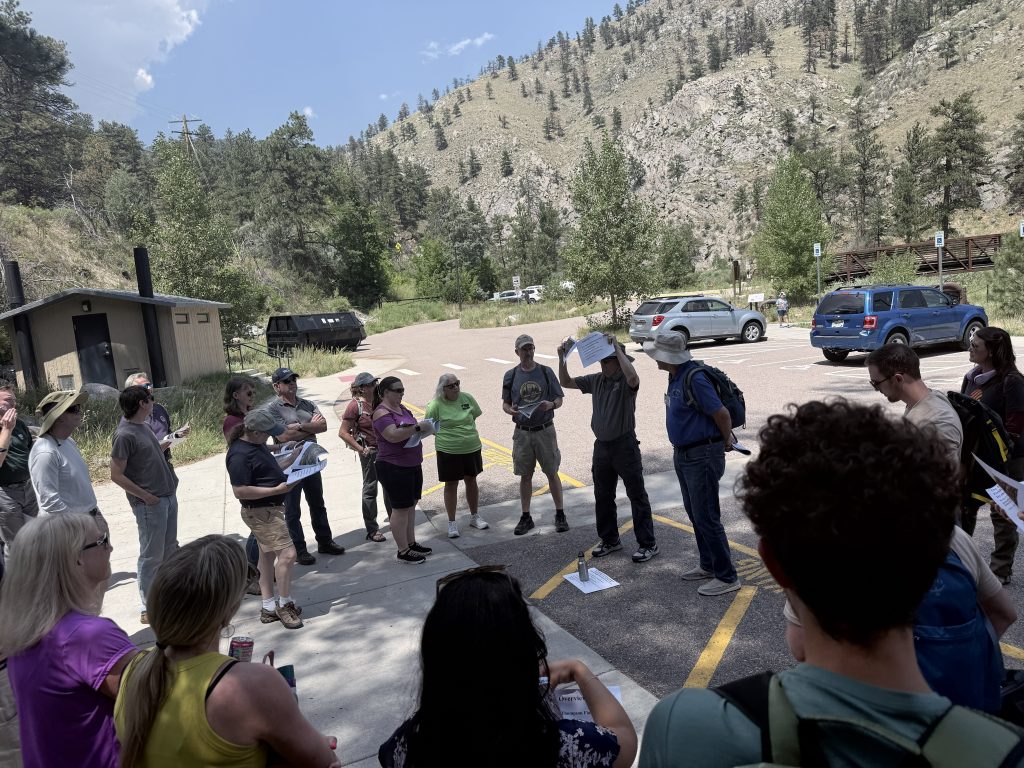
Drs. John England and Robert Jarrett convene the flood tour at Viestenz-Smith Mountain Park. The field trip covered several topics including paleoflood evidence, differences between the 1976 and 2013 Big Thompson floods, and how peak discharges were determined. Photo courtesy of Keil Neff.
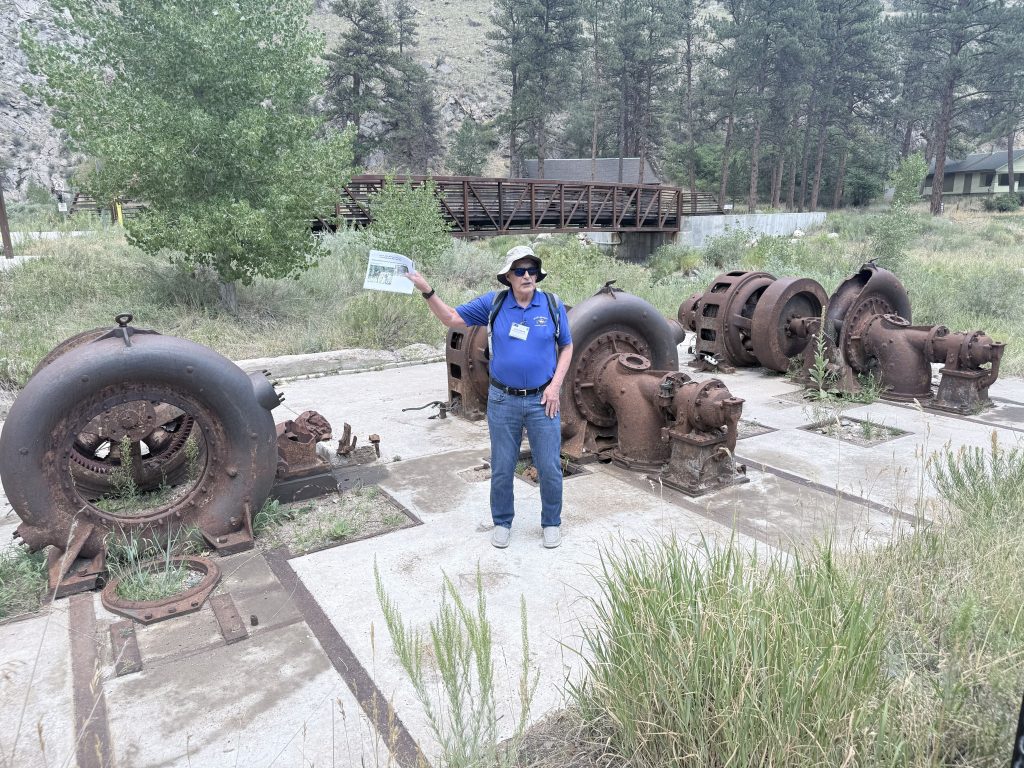
Robert Jarrett stands near the remnants of Loveland’s former hydroelectric power plant, which was destroyed during the flood.
I am an Engagement Climatologist for the Colorado Climate Center, where I help provide climate services and outreach throughout Colorado. I recently earned my PhD in Atmospheric Science from Colorado State, and I have research interests in extreme weather and forecasting.





 Russ Schumacher